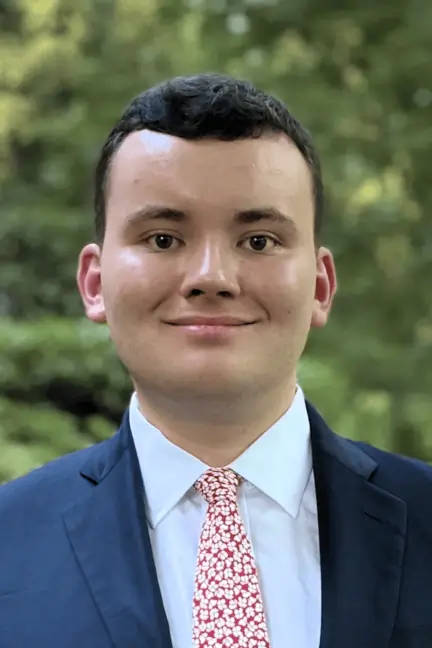

Sometimes the word “trying” doesn’t sound like much, but anyone dealing with a loved one who has an addiction knows exactly how much it can mean. Recovery is not one big decision that suddenly fixes everything. It tends to be hundreds of small decisions to get up, keep going, and try again. Jay had struggled, he had fallen, he asked for help, and with that help he had gotten back up. His family describes the last years of his life as a period of enormous personal growth.
On a crisp November evening, in 2024, Jay was 31 years old, he was sober, and he was getting his life back together. For years, Jay had struggled with alcohol abuse and had gone through treatment, and his road had not always been easy. His father knew that better than most. There had been hard years, setbacks, fear, disappointment, and probably more worry than any parent should have to carry. But there had also been real progress. Jay was trying to turn his life around, and his family could see his progress.
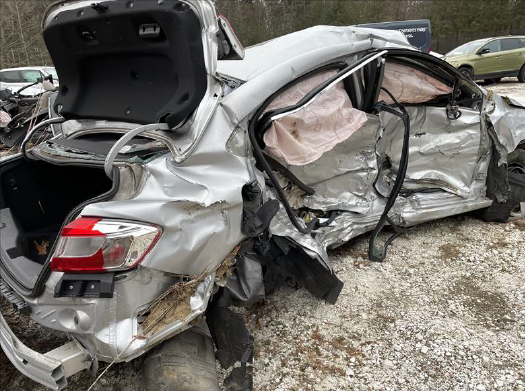
On that Sunday evening, Jay was living his hard earned progress. He left his cousin’s house, got into his Chevrolet Cruze, and started driving home. Unfortunately, he never made it. At approximately 7:35 p.m., Jay reached St. Stephens Church Road and Crain Highway in Gambrills, Maryland. Crain Highway is a large, divided highway, and Jay was attempting to cross the northbound lanes when a Chevrolet Camaro traveling north struck his car. The impact was devastating. Jay’s Cruze rolled, and he became trapped inside. First responders tried to save him, administering CPR at the scene, but it wasn’t enough. Jay died at the scene.
One minute, a son was on his way home. Then suddenly, a father was being told that his son wasn’t coming home at all. There is no way to adequately describe what that does to a parent without making it sound smaller than it really is. Jay’s father had watched his son deal with his issues. He had watched him go through treatment. He had watched him struggle, fall, get back up, and begin moving forward again. After everything they had been through together, he was finally getting to watch his son rebuild his life. But just then he lost him.
Losing Jay wasn’t the only thing his father was about to have to deal with. As the crash was investigated, an early theory emerged that Jay had run the red light himself. There were witnesses to the crash with conflicting accounts. One witness believed the light was red, though his recollection shifted. Another was a friend of the driver who struck Jay. He said the friend’s light was green and estimated that he was traveling around 65 miles per hour. A third witness gave an account more favorable to Jay, but her recollection also varied. Everyone had a version of what happened, but what Jay’s father needed was something more reliable than memory. He needed something Jay didn’t have anymore: a voice. Jay couldn’t tell investigators what he saw that night. He couldn’t explain when he entered the intersection or what color the light was. He couldn’t challenge anyone else’s memory of what happened or tell anyone that perhaps they didn’t have the whole story. He was gone.
Jay’s father knew his son wasn’t perfect, and he wasn’t trying to pretend that he was. He knew the mistakes. He knew the difficult years. He knew how badly things had gone at times because he had lived through those alongside his son. He had probably been angry with Jay, disappointed in him, terrified for him, and hopeful for him more times than he could count. But that is the thing about being a father. A father can know every mistake his son has ever made and still love him completely. He can know the worst parts of his child’s story and still know that those parts are not the whole story.
Something about the early version of the crash didn’t sit right with Jay’s father. His son was gone and could no longer explain what he had seen or defend himself against the assumptions being made about his final moments. His father wanted answers, and he wanted someone willing to look deeper than the first explanations of what happened. Jay’s father went to one law firm, that did next to nothing, before closing their file, believing there was no recovery to be had. But Jay’s father was not done fighting; he needed to a find a law firm that was willing to fight, too. He turned to Blaszkow Legal, and their investigation began.
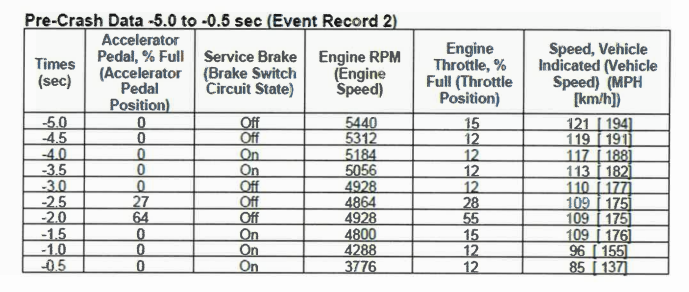
There was no known video of the crash. But the vehicles themselves held part of the answer. Modern vehicles record electronic data in the seconds before a serious collision, and when the data from Jay’s vehicle was examined, it revealed something incredibly important. Five seconds before the crash, Jay’s vehicle was traveling 0 miles per hour – he was stopped. The data showed that his vehicle then began to move, slowly accelerating into the intersection.
The data from the Camaro told a very different story from the version the driver tried to pass-off. Five seconds before impact, it was traveling 121 miles per hour! That was very different from the estimate of 65 miles per hour given by the driver’s friend. By the time of impact, the Camaro had slowed to approximately 85 miles per hour. Five seconds later, a father lost his son.
The electronic data could not answer every question. It couldn’t tell anyone exactly what Jay saw, and it couldn’t conclusively establish the color of the traffic signal at the precise moment he began crossing Crain Highway. The witnesses couldn’t agree either. Because of the conflicting accounts, prosecutors ultimately determined that they could not prove beyond a reasonable doubt exactly what occurred with the traffic signal and did not believe they could meet the burden necessary to pursue vehicular homicide or vehicular manslaughter charges.
That was a hard reality for a father protecting his son’s legacy. Sometimes evidence gives a family part of the truth without giving them every answer they desperately want. Sometimes there isn’t a neat ending where every question is resolved and every wrong receives exactly the consequence a family believes it deserves. But there was one thing they now knew: the first version of the story wasn’t the whole story.
There was accountability on the traffic charge as well. The driver who struck Jay ultimately pleaded guilty to reckless driving in wanton and willful disregard for the safety of persons and property. The court entered a guilty disposition and identified his conduct as having contributed to the crash. Those things mattered, but none of it made Jay’s father whole. He didn’t really want to win an insurance claim or a court battle. He wanted his son.
That is the part about wrongful death cases that sometimes gets lost. Lawyers talk about liability, evidence, damages, insurance coverage, negotiations, and recoveries. Those words are necessary, but they sound very different to a father who has buried his 31-year-old son. There isn’t enough money, a court ruling, or a guilty plea that can give him what he actually wants. He wants another phone call, another Thanksgiving, another birthday, and another chance to watch his son keep getting better. He would probably even take another stupid argument that, looking back, he would give anything to have again. He simply wants one more day with his kid.
That is the part no legal case can fix. The insurance companies could be challenged. The crash could be investigated. Evidence could be uncovered. The original story could be questioned, and accountability could be demanded. But none of it could bring Jay home. Sometimes people look at a wrongful death case and see a lawsuit. A father looks and sees his son.
Jay’s history with alcohol abuse would be easy to leave out of his story. It would certainly make the story cleaner, but real people don’t live clean, perfectly written lives. Jay’s life was complicated, just like most lives are. He struggled, he needed help, he went to treatment, and then he started doing better. The toxicology report following his death confirmed that Jay was sober at the time of the crash. He was doing the work. He was moving forward. He was trying.
Maybe that is one of the cruelest parts of this story. His father had spent years worrying about his son and watching him battle addiction. There were probably nights when he feared that addiction might be the thing that took Jay away from him. Then Jay started winning that battle, and a car crash took him instead. Jay should have gotten to find out what came next. He should have gotten the chance to see what all that hard work could become, and his father should have gotten to watch.
Blaszkow Legal, PLLC was able to fight hard and to convince the insurance companies that Jay was not at fault, through diligent investigation and aggressive representation. Blaszkow Legal was able to recovery all of the monies available for a grieving family. While money does not bring back a loved one, it does go some way to holding a negligent and reckless individual accountable. A Maryland car accident lawyer can help families investigate fatal collisions, challenge assumptions about fault, and pursue compensation when a loved one is killed in a crash.
At the end of the day, this case wasn’t really about an insurance company, electronic crash data, the difference between 0 miles per hour and 121 miles per hour, or even a reckless driving conviction. Those things were part of the fight, but they weren’t the reason for it. The reason was Jay.
Blaszkow Legal is proud to have helped Jay’s family tell the final chapter of the story.